
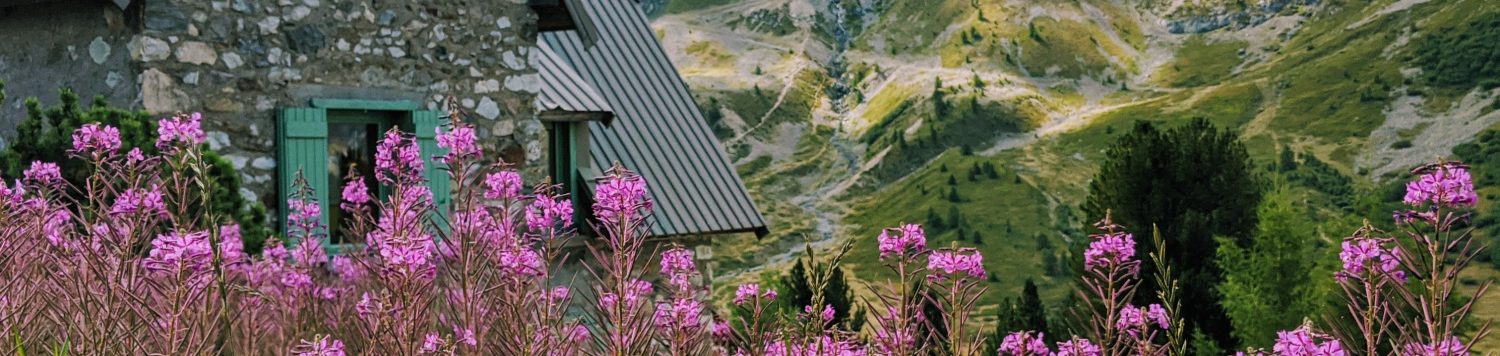

Christmastime in Valbonne.
Espoir
(es-pwar)
noun, masculine
hope
The following letter is an intimate look into la naissance of a certain "thrice-weekly" journal from France. This online blog began in October of 2002 following its earlier pen-and-paper beginnings—as letters that were sent via snail mail to a group of beta readers: my family and friends! For this opening story-letter, I have chosen a Wild West theme, one that seems fitting, considering my southwestern roots. Though I left the Phoenix desert half a life ago, a part of my heart forgot to board that plane to France.
In October of deux mille deux I began a website, a vitrine of sorts, for my writing. I put up a few published stories, a bio and un livre d'or, and waited beside my virtual mailbox, ginger ale in hand.
A few tumbleweeds blew past, but no publishers. My address, my website—my writing—remained in a cyber ghost town.
I continued to peddle my words, sending out queries for my stories. I did not sell many.
I thought to offer something to attract editors and publishers, and so I stepped out of my cyber-office and nailed up a sign. It read: "French Word-A-Day." I waited patiently for a customer. More tumbleweeds blew past. No publishers.
I continued to show up at the page, or keyboard, each morning and the stories collected like so many stars over a sleeping desert on a warm summer's night. As for l'espoir, I had that. Still, no publishers came.
But you did.
You must've seen the sign out front. You signed up for French words and accidentally found yourself in my French life. You must have said, "Pourquoi pas?" then pulled up a barstool, ordered a ginger ale, and settled in.
Your presence reassured me. I wrote and wrote and wrote a little more. And mostly I hoped you would not leave town when the next cyber stagecoach passed through. At least not until I figured out what it was I had to say.
Then one day you said: "Thank you for your missives," and I ran to my dictionary to look up that word. You also wrote: "Thank you for your vignettes."
"'Vignettes'! 'Vignettes'!" I giggled, doing a little square dance. I never knew what to call "it" besides an "essay" (which, I felt, was a spiffier term than "diary entry").
Many good months passed with small writing victories, and a former ghost town came to life.
But my joie was short-lived. A menace and a few mean-spirited e-mails arrived. I almost yearned for those tumbleweeds. Instead, I mentioned my soucis in a letter, and suddenly it was Showdown at the French Word-A-Day Corral! You showed up with your posse and told the bandits to get out of town. Then you turned to me and said: "Don't let the !@#& get you down!"
While others don't understand the life of a former desert rat-turned-French housewife-turned-maman and, recently, struggling écrivaine—you do.
At a shop in Draguignan, the vendeuse says: "Your name sounds familiar. What does your husband do?" I fall back into a slump, reminded that what I really am is a pantoufle-footed housewife with a backup of three loads of laundry and a sink full of dirty, mismatched assiettes.
I return home to the dirty dishes and the laundry—and to a letter from a reader, which says: "Thank you for your stories." I sit up straight, dust off my keyboard and am reminded that what I really am is a working writer—if only I will show up at the page, and write, each day.
So, thank you, dear Reader, for helping me to live my dream: for reading my—missives—and for your thoughtful words of support. Although publishers and agents may not be beating down my porte, each time I crack open the door—there you are.
In the new year, I'd like to continue with the stories, expanding the gist of this French Life. I hope you'll stay in town because I have figured out that I do, indeed, have something more to say. In fact, there is so much that I have not yet told you.
And while you know of the light-hearted, bubbly side of this expatriation, Real Life continues to rumble within my writing veins, like a rowdy, drunken saloon girl, wanting to be heard. Only I will need to slap her cheek, pour a bit of cool water over her head, take a tissue to her running mascara and tell her to have faith, that her story will be told, if she will only show up at the page.
May you, too, live your dream in the coming year.
Bien amicalement,
Kristin
la naissance = birth
.
.
Update: I am reworking the intro paragraph, check it out, now, and please let me know if you have any edits. Here is the paragraph that I took out:
Discover more from French Word-A-Day
Subscribe to get the latest posts sent to your email.
Viva la ginger ale!
Hi Gretel!!!
I can’t believe that you are back here in 2005 edition with me at almost the same time today.
You have been a dear friend to Kristi in her writing, I am so happy we have you in our lives.
Kristi – I love this post….you are a writer forever – just open your arms and enjoy…
XOXO
MOM
i DON’T know why the time say’s 1:13 p.m. it is really 6:07 a.m. here in Puerto Vallarta, Mexico.
this computer needs to go to the Dr.
XOXO
MOM
Votre vignette reads well for me, but I’m not a picky reader as long as you don’t misuse there, their, and they’re or it’s, its, and its’ – those are my finger nails on the blackboard.
I cannot believe you are ,or ever were doubting your abilities to WRITE. You do so -effortlessly & it is always a delight to read about your slices of life.
I have learned SO much from your W-a_D ,probably as much from you as I have done from expensive classes . THANK YOU for all of your words. Keep them coming, your talent will shine out in the end when you reach a wider audience- meanwhile,I will go & pre-order your book. Ameties. Karrie
Thank you very much, Karrie! I havent figured out how to make the book available for pre-order (I doubt, in this case, it will be possible). But please check Amazon next month… meantime, pray for me!
Good morning, Kristin!
If you are serious about wanting help with language conventions, feel free to send me your work. I can help with the English. The French mistakes will need to be handled by someone else. 🙂
I really enjoyed this post. Not only has your ghost town been populated with readers, many of your readers have befriended other readers via your blog. I have new cyber friends I’ve never met in person. One of them is sharing his cooking tips with me. He’s one of my favorite people on the planet!
Sorry about those mean-spirited readers. I’m glad you didn’t let the *bleeps* get you down!
Only because you asked…I found a small typing error that needs correction. A small run-together of words..
“if onlyI will show up at the page, and write, each day.” Do you see it? “onlyI”
You might wish to correct that.
But much more important- I thank you for your ‘missives’ (my personal favorite). This may be one of my favorite stories as well. Though how you could choose? Which of your children do you love the best, etc…!
I cherish my early morning quiet (5-6:00 am) before the husband and dogs are up. I check my email at that time. Yes..my heart leaps when I see my ‘French Word a Day’ in the inbox! Thank you, thank you..thank you. Please ignore MY typos!
Hi Kristin
Hey…where did you find ginger ale in France? I lived there for three years, and don’t think I ever saw it!
In the fourth paragraph, first sentence, “so I went out front my cyber office”
It is awkward, I think…is there a word left out?
In the fourteenth para, there is a space missing between words.
good luck, Kristin!
I really enjoy your stories and the glimpse of your life! I Guess I am a bit of a voyeur!!!
Thank you, Mindy, for your very kind offer, but I will be open editing this online so as to keep the latest version current and to involve all readers in this process 🙂
Thanks, Dawn, for catching that one! Very helpful. And your words warm my heart!
First let me say how much I love your site…the photos, the light-hearted “missives”, the in-context vocabulary….merci bien!
My only suggested “editing” of this story, (parce que tu as demandé des suggestions!):”I went out front my cyber office” sounds awkward to me…I re-read it a few times, wondering if you meant “from” instead of front….
Maybe “I stepped out of my cyber office” or…?
Good point, Sarah! Ill have another look at that one, after lunch. My eyes are a little blurry from low-blood sugar. Please check back and see how I do rewording that sentence! Meantime, how about So I went outside of my cyber office…
Perfect, thanks, Michelle – I think this solves the problem 🙂 Time for lunch…
ecrivaine (maybe?)
and was the picture taken in Valbonne? It is a favorite town of ours.
Love your stuff!
I think you could lose the second “and” and the word “am” in this paragraph – it would sound less clumsy.
At a shop in Draguignan, the vendeuse says: “Your name sounds familiar, what does your husband do?” and I fall back into a slump and am reminded that what I really am is a pantoufle-footed housewife with a back-up of 3 loads of laundry, and a sink full of dirty, mismatched assiettes.”
It’s all a matter of personal taste however.
Good luck!
Sandra
Well, I am a stickler for typos and misspellings, but your “vignette” was so engaging that I forgot to look. If they are there, someone else will have to find them!
Thank you for your wonderful words…the French ones and the English ones.
It’s a beautiful day in Virginia Beach, Virginia! Especially since I am starting it out with you and all your other readers and fans!
I always look forward to your emails, but have only been receiving them this year, so I especially enjoyed this article about the beginning.
You have many fans wishing you well.
My quibble is with all the commas in the first sentence–perhaps set off the phrase “a vitrine of sorts” with dashes rather than commas. (One of my favourite French phrases is “lecher les vitrines”–I love to translate it literally, and watch my unilingual friends’ reaction to licking windows!)
Hi Pamela, Thanks for your quibble 🙂 Im wondering if removing the comma after deux mille deux is an option? Otherwise, Ill be considering those dashes of yours 😉
Hi Kristen,
I missed your posts last weeek while you were away. I found that there was a void in my days and was really looking forward to reading your stories again. When I read your post this morning, it was such a surprise because I am currently working on a manuscript and you have been my inspiration for believing I can do it!
I have read your book and your blogs and am so impressed with your writing. I think that I’m just a regular person, without any formal journalism training and have a way with words-like you. Through telling your own story of being a writer, its led me to think that if you can write and be published, so can I!
I’ve always thought that if we ever had the chance to meet, that I would tell you how you’ve inspired me, and this just seems to be the perfect opportunity. Your timing couldn’t be better, as I’m now working on the manuscript everyday now. Thank you for this wonderful little learning exercise. I look forward to reading about your exciting progress over the next 21 days. Good Luck, I know you can do it!
recommendations:
1. 2005, 2006, I think you need to update to 2011, but perhaps I’m mistaken.
2. you may need something between the first and second sets of quotes:
“Thank you for your vignettes.” “Vignettes! Vignettes!”
Ok, I just finished a Grammar course with the University of San Diego online in pursuit of the Copyediting Certification, so I’m going to try to use my new skills.
Your first sentence does not seem to have a subject. Also, in the first sentence, you use a [;], and a [,}. There should be two commas instead.
“For this last edition of 2004, [we will take] a more personal look into la naissance of this letter from France[,] a background on how it came about, and its raison d’être (besides building one’s vocabulary!).”
“nailed up a sign; it read:” instead use
[nailed up a sign – it read:]
“The publishers and agents may not be beating down my door. [ door, but ] But each time I crack open la porte—there you are.”
Ok, after reading this post, I am re-inspired to tackle my own blog again, which I have woefully neglected!!!
Hi Kristin,
Oh this is great, speed-publishing, and we get to watch! Love it. Your energy constantly amazes me, just like your wonderful writing.
So, I’ve proofread. Most has been mentioned, & I only found tiny things.
-‘southwestern’ should not be capitalized.
-in the ‘missives’ paragraph, you sometimes use single quotation marks and sometimes double for same use, so take a look at that; and I think ‘vignette’ should be in quotes, in its first use, for consistency, like ‘missives’.
–3 should be spelled out.
–I like your first paragraph!
Have fun and bon courage,
Lynn
Hi Kristin!
I hadn’t been commenting much, but I always enjoy getting your missives. Thanks a bunch for ‘turning up at the page and write’. I love learning about French words I hadn’t known before and elements of French life not seen by casual visitors. You are definitely owed a good ginger ale should you ever pass through my town. :o)
Please feel free to ignore the suggested corrections below. Your vignette already reads so well that I’m really nitpicking a bit. ;o)
Suggested corrections:
1. “Your presence reassured and I wrote. And wrote. And wrote a little more. And mostly hoped you would not leave town when the next cyber stagecoach passed through. At least not until I figured out what it was I had to say.”
I think publishers don’t like seeing a lot of sentences begin with ‘And’, so perhaps you should lump them into a single sentence with commas instead. Perhaps: ‘Your presence reassured and I wrote, and wrote, and wrote a little more, mostly hoping that you would not leave town when the next cyber stagecoach passed through — at least not until I had figured out what it was I had to say.’
2. “Many good months passed, with small writing victories and a former ghost town now come to life.”
Perhaps this will read easier without the comma?
Thanks again for writing and sharing. Hope you and the family are having a good autumn in France!
Smorg
Only because you asked …
“…with a back-up of 3 loads of laundry….”
Generally the numbers one through ten are written out,numerals are used for 11 and up. In a series use only numerals, “I had 5 dogs, 27 cats, 2 horses, etc.”
Maybe it’s not written in stone, just something I noticed, and you can do what you want in any event.
Your writing is always engaging. I’ll look forward to your selections in a book form. Thanks, Kristin.
Kristin,
Onward and upward! Saw no errors or typos. Stories about Chief Grape, the kids, Blaise and Smokey Dokey are all winners. People like a peek into the life of this lady from the desert who turned into a French wife with what seems to be infinite patience but not enough self esteem. You are the greatest! Accept that and, with God’s help, you will succeed. Bonne fortune!
Kristin
Nit picking perhaps but:-
“I needed to offer something to attract editors & publishers. A thought occured to me & so—”
“nailed up a sign, which read ”
“You reassured me and so —”
Re the first chapter, perhaps you could talk about the writer within yearning to get out ,about being in a new culture & how ideas were buzzing in your head .
Anyway, whatever you do I always enjoy your stories, & look forward to THE BOOK when it is finished .
Best of good luck with this project and keep us posted
Bisous, Audrey
Hi Kristin,
This is a nice idea, sharing your publishing adventure with us all. I would be especially interested in the last bit, the marketing. The two books I published last year suffer from a lack of it!
My main comment on today’s story is that it seems more of an introduction than a chapter. the first paragraph is the most important. it needs to hit the reader, enticing him/her to read on.
Good luck!
Love ‘real life’, Love France, Love the fact that you are willing to share your real life in France with us … very skillfully 🙂
About your 1st paragraph … would it work to put it in between the 3rd & 2nd paragraphs from the END (3rd begins ‘So thank you,dear reader…’ & 2nd begins ‘In 2006 I’d like to continue…) – with these minor adjustments? Or maybe just make it the beginning of the 2nd to last paragraph instead of its own? Since you’re talking about specific dates/years, it seems like it may fit here. . .
“This last edition of 2004 (2005?) has been a more personal look into la naissance of this letter from France; a background on how it came about, and its raison d’être (besides building one’s vocabulary!). Most of the stories in 2004 (2005?) were in keeping with a French theme. For today’s personal story, a Wild West theme seemed fitting, considering my Southwestern roots. Though I left the Phoenix desert one third of my life ago, a part of my heart forgot to board that plane to France. In 2006, I’d like to continue …”
I remember back in 2006 when you first discovered the word “vignettes”. You were so funny, somehow you were able to use that word in every conversation we had for months. I would have to say vignettes became your first favorite word after “MOM” when you were my precious little baby.
I am thoroughly enjoying everyone’s comments.
Do I understand this correctly, you are at this very moment adding these correction into the story above? How do I put my gypsy story up again and work on it along with you? Of course you don’t have time now to answer all of my questions…do I need a program (Typepad?) I will now go back and go over your 5 POINTS to write my stories. Of my God, I am on the train roaring down the tracks just behind yours. I imagine that you are sitting in your fancy caboose (you have had 8 or 9 years to polish your environment.
Was I supposed to buy the ticket on Amazon’s train????
I am going to work on my notebook now, could you please send me my two stories.
As I lean my head out the window of my train I can feel the breeze blowing away all of my obsessive worry’s of life…I don’t have time for them anymore…I’m on my way to mastering vignettes.
XOXO
MOM
Jules, you are just so cute. I miss being with you in P.V. so much, and little Shadow misses Breezie. I hope you don’t mind me sneaking this in to your mom, Kristin.
Hi Kristin,
I love your writing about your life. Your easy and inviting style have made feel that I am a friend and your morning blog is just like stopping by for a chat.
For me, your photos are very important to capturing your everyday life. I hope you are going to add them to the book.
I missed you in your absence. Please don’t stop and I am looking forward to purchasing your book.
Hi Kristin
Only thing I could see was the e missing at the end of ecrivain ( cuz you’re une femme!) but someone already caught that…I agree wholeheartedly with all your readers, never doubt your writing skills or your gift for storytelling, and can’t wait for next month, now I know what many of my Christmas gifts to friends will be! Bon courage, je sais que tu vas arriver a ton goal!!
gros bisous a vous 6,
Suzanne
As a Brit in France I seriously enjoy reading your gems in FWAD. They keep me sane, thanks for that!
Editing: I’d only mention being consistent with whatever dash you decide to use. You have a mixture:
la porte—there you are (emdash)
writer–if only (hyphens)
Perhaps the endash with a space either side (it’s longer than a hyphen), or the emdash as above, would look nicest in a book. What do you think?
Whoa – are you cook’n or what. Good luck.
Wow, I just want to say that it is fascinating to me not only that you have set this fast-paced goal for yourself, but also that you are sharing the process with all of your readers.
A wise woman once told me that it is only important that we achieve the goals that we set for ourselves. I take this to mean- only the goals that are true to our heart- not any that may come from the ideas of what others think we should achieve.
I look forward to reading the results of your 21 day challenge!
Elaine
Kristin:
Just a couple of thoughts about the following:
“Your presence reassured and I wrote. And wrote. And wrote a little more.”
Technically “And wrote.” and “and wrote a little more” aren’t sentences. Maybe something like: “Your presence reassured me.” “I wrote and wrote and wrote a little more.” Also “But my joie was short-lived.” perhaps better to say something like: “I was happy for a while, but my joy was short lived.” If the ideas are closely connected you probably don’t need a comma.I worked with an editor who said folks use too many commas.
Edie from Savannah
Mom, here are your precious stories about Josie and the other characters from your childhood:
Part One:
http://french-word-a-day.typepad.com/motdujour/2009/04/gens-du-voyage.html
Part Two:
http://french-word-a-day.typepad.com/motdujour/2009/04/bougeotte.html
Once I figure out how to self-publish in 21 days… Ill help you with your book. Meantime, get busy writing more stories!
Dear Kristin,
You, and Smokey, might consider translating the “Don’t let the !@#& get you down!” into dog-Latin (that is, “non illegitimi carborundum !”).
I, myself, like your use of commmas ! I was taught to use a comma where there would be a natural pause if speaking the piece aloud.
But you appear to have omitted “écrivaine” and “bien amicalement” from the vocabulary list.
I, too, continue to enjoy your writings – they are always a pleasure. Please keep them coming !
Blessings,
Ned
The publishers and agents may not be beating down my door, but each time I crack open la porte—there you are.
You could write: Although publishers and agents may not be beating down my door, each time I crack open la porte you are there waiting and wanting to read.
OR
Although publishers and agents may not be beating down my door, each time I crack open la porte-there you are.
LOVE THIS IDEA OF YOURS! And your blog is among my top favorites !
Whoa, so many excellent suggestions and edits since I last popped into this comments area! Ive been busy incorporating your suggestions. Thank you! Ill say this again, but one thing that is nerve-racking about incorporating edits–is the typos that are sometimes introduced in the very editing process (yipes!)… If you happen to see anything off, thanks for letting me know 🙂
I do not like the term “desert rat.” You seem to want to show us how hardscrabble you grew up but it rings false even if you lived in a mobile home on the edge of the Arizona desert. And it is demeaning to your mother who was probably doing her best..and to you who seemed to work hard at various jobs.
I also do not know why you call your husband a grape farmer. It seems overreaching in cuteness.
The photos are always terrific. I’d make a calendar.
What a great way to start your new book!
I hope you are feeling better now. I don’t write many comments, but, as a fellow francophile, I enjoy following your adventures.
I love your vignettes because they are always entertaining, informative and highly enjoyable. I look forward to seeing one in my inbox. Merci bien for a delightful ‘French fix’.
Hi Slv,
Thank you so much for explaining to Kristi that the term “desert rat” sends a negative message. Also, I have never cared for the “grape farmer” or living on a farm when she has finally made it to the vineyard. As everyone knows most kids don’t listen to their parents, but hear the correction more clearly from a stranger.
Thanks for reading my mind as I cringe each time she mentions trailer park…although there are so many great and funny stories that brought us to living in the trailer park at the edge of the desert. How we ever survived I’ll never know. I must write the story of how we ended up in Phoenix. It was August 15, 1969 – I had impulsively called a mover to move the trailer off my parents property (Heidi, Kristi, and I) had been living on my parents property because Kip had been sent off to Thailand. Kip has actually bought the trailer for us because my Dad had convinced him that we could move the trailer from the ranch in Utah to the property in Arizona for the winter while he was off fighting the war. I can only shake my head now at the problems I faced.
What is the French word for a man who owns a vineyard? I think I would prefer that description also.
Kristi Darling, I am not picking at you but now that I am getting older could you color in some of the rough spots of my life.
XOXO
MOM
Don’t sweat the small stuff. I truly enjoy reading your mots francais. There are a lot of Americans who love French and you present France through the eyes of an americaine which Americans love, since most of them don’t truly understand la vie francaise. (kind of like Peter Mayle and the Brits)
I was writing to suggest you make a calendar, but I see Slv beat me to it. I had my French students make calendars and I was surprised how few of them knew anything about a calendar! Of course they had to start the week with lundi and they had to write in les fetes francaises. After you finish your speed writing, you should attempt a calendar. They make good gifts pour Noel for the person who has tout!
Bonne chance,
Alice, le 2 novembre, le jour des morts
Hey, Kristin –
I’m sure that many of the previous posters have already caught these, but here goes.
Comma after the intro clause “In October of deux mille deux” (optional, I think)?
Don’t think you need the quotes around “bio;” it’s an accepted word.
Comma needed after “tumbleweed blew past” because “no publishers” is an ellipsis of “no publishers did,” which is a complete sentence.
Comma needed after “attract editors and publishers” because what follows “and so” is a complete sentence.
Consider “cyberoffice” or “cyber-office.” (Similarly for “cyber ghost town” and “cyber stagecoach.”)
I’d eliminate the em dash and just make a new sentence: “It read: “French Word-A-Day.” But that’s a style choice, yours to make.
Period should be inside quotes: “French Word-A-Day.”
Don’t think you need quotes around “show up at the page,” unless it’s an existing common phrase I’m not familiar with.
Set off “or keyboard” with commas.
Need comma after “each morning,” because what follows “and” is a complete sentence.
The sentence that starts “And mostly hoped” has no subject, which is fine if that’s a deliberate choice you’re making. I think “And mostly I hoped…” fits in with the paragraph better, but again, your choice.
Don’t think you need the quotes around “missives” and “vignettes.” On the other hand, you could put them around the two “Vignettes” in the next paragraph because in that case, you’re referring to the word itself and not the thing it represents.
The next paragraph says that months passed with two things: 1) small writing victories, and 2) a former ghost town now come to life. That doesn’t read right. I think you mean “Many good months passed with small writing victories, and a former ghost town came to life,” but I could be mistaken.
The second sentence of the next graph says that two things arrived, one was a menace, and the other was mean-spirited e-mails. Is that what you mean?
Need a comma after “…my soucis in a letter…” because what follows “and” is a complete sentence.
Your style throughout so far has been to intro quotes with a colon, so this one should be “Then you turned to me and said:…”
With apologies to Jules, I love the term “desert rat” (it’s not negative if you’re using it to describe yourself), but it shouldn’t be initial-capped.
At this point, you switch from the past tense to the present. Again, it’s OK, if that’s a deliberate choice.
“Your name sounds familiar” and “What does your husband do” are both complete sentences, so should be either “…sounds familiar; what does…” or “…sounds familiar. What does…”
“Backup” appears unhyphenated in many more dictionaries than it appears in hyphenated.
Delete comma after “loads of laundry.”
Delete comma after “I return home.”
I’d go with an em dash rather than a comma before “and to a letter from a reader…” but that’s a style choice. Although now I see there’s an em dash in the next sentence, too, which may be a deterrent. Your call.
Add comma after intro clause “…in the new year.” (Love the change there, btw.)
“Gist” means “central point” or “main idea.” If that’s what you mean, you don’t need the quotes around it. If that’s not what you mean, then you should change it (duh).
Love the extended saloon-girl simile as well.
If this is more detailed (i.e., picky) than you’d like, please say so.
Hi Kristin!
Espoir! What a remarkable word! This is the word everybody should start and finish their day with!
I won’t give you any comments about your English and French: both these languages are not my native. But since I’ve just finished reading your book (2007 edition) let me give you some friendly suggestions:
1. I agree with your son Max, that this is a good idea to put translation of French words in the text, immediately following the words (in peren. for example).
2. The font face of the text itself should be easy readable, bright and font size should be bigger.
I was really tought by your stories: I am l’etranger too. I’ll write you later, right now you are busy with your new book.
Keep on writing, you are doing a good job!
Good luck!
Amicalement,
Olga.
Hi Kristi…so glad you have come back to town! So lovely to hear your sparkly voice again!
I enjoy this “missive” as much now as I did earlier maybe because you have generously included your readers into your thoughts 🙂
For me the only suggestion I may have is this use of dates which makes me feel a little like reading a history book and competes a little with the story which I feel could be a little more timeless. Although you have written this piece early on we, the reader, can connect with your emotion as we can see a little of it within ourselves which makes this still relevant no matter the year 🙂
I like your use of “deux mille deux” as it is softer in sound, a french use of language within the english prose and is written rather than using symbols. I am sure you can come up with a more poetic way of showing passing of time! Best of luck and I know you are going to have a busy time! Gretel xo
PS Hi Jules…from January! 🙂 x